They say adulthood begins at 18 – and adulthood is not easy. Our own coming of age forced us to put together a shortened edition, one struck in the midst of preparations: and it’s rich, loud, tinged with both sadness and hope. For this is just one of the many difficult years for culture, a year in which we realize that the decency we seemed to be approaching was, in fact, a kind of complacency, and that we should have valued it more.
We learned long ago that serious, important people – the ones who make the big decisions – like to believe that the so-called “diseases” of passion, dedication, and concern for others’ well-being simply won’t let us leave. But the truth is, there are fewer and fewer of us left.
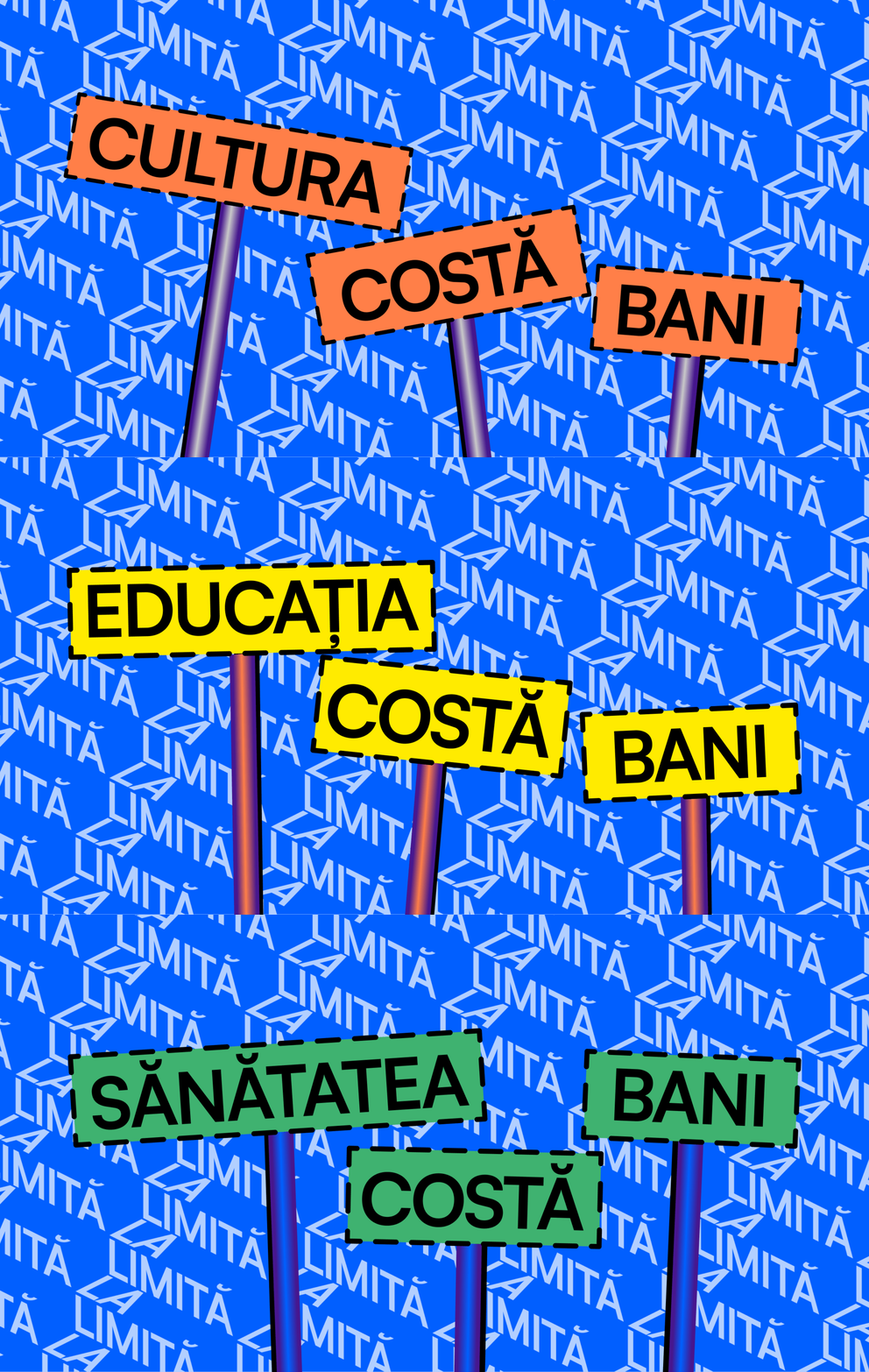
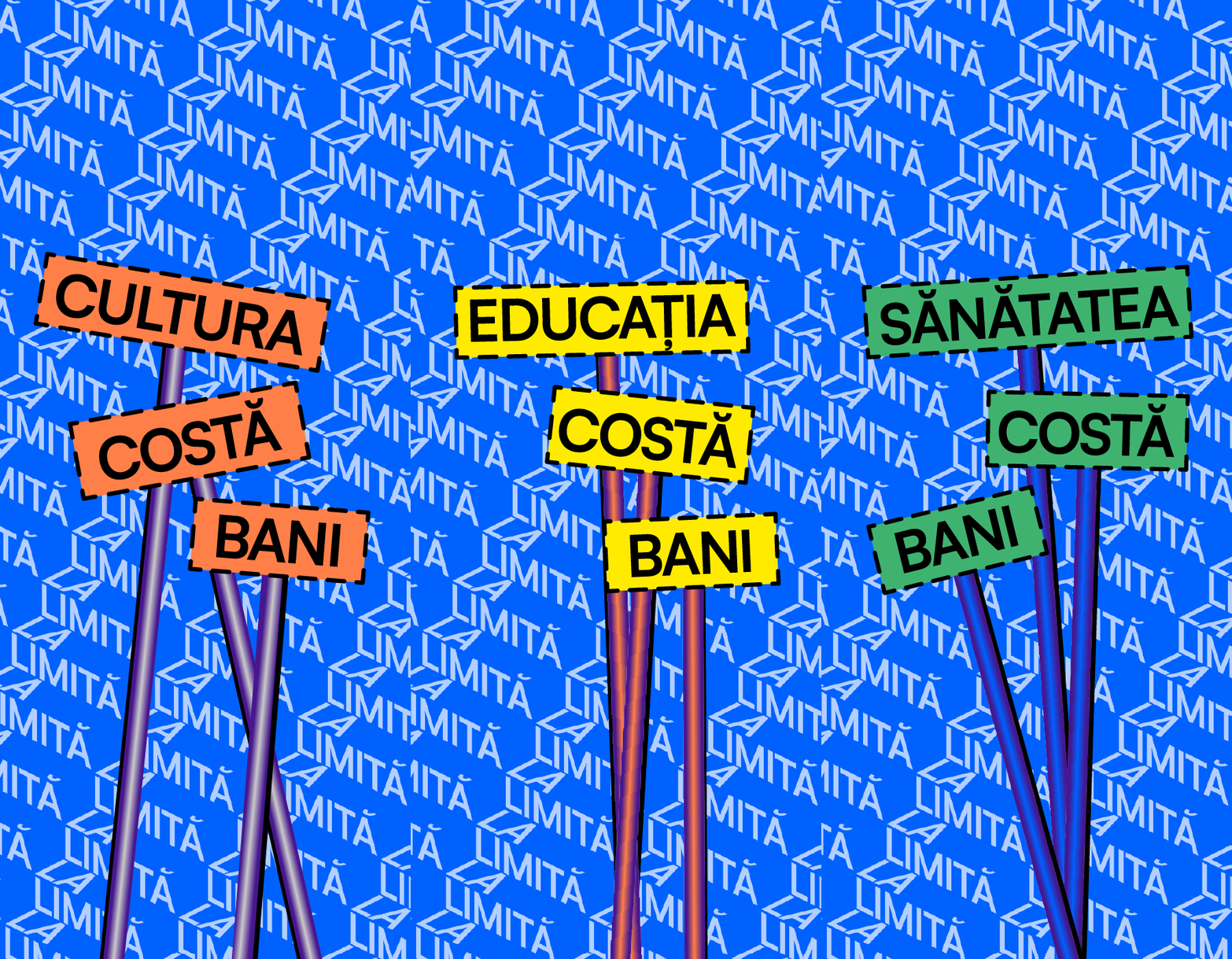
Culture costs money. Education costs money. Health costs money. Yet their absence costs even more.
We named this edition, as if prophetically, "On the Verge". We didn’t know back then that, in just a few months, everything around us would escalate and become (even) more nonsensical, and that we ourselves would reach the very bottom of our hope to carry on.
What remains of us when we are forced to shrink? What purpose could a human rights film festival serve at a time when these rights are further relativized, and those who should be protecting them ultimately end up violating them without being held accountable? How can we persuade you that if everyone – including first and foremost the state – cuts from education, culture, health, and social services, our collective resilience would weaken altogether?
The answer was at first a shout: out of frustration, helplessness, and the strain caused by the somehow endless experience of (re)mobilizing with even fewer resources, chronically underfunded and exhausted. We are aware that some of us are, however, more privileged – and that, essentially, we can stay afloat only with the support of those around us. Even so, systems cannot be merely personal battles.
We believe we need spaces for open dialogue, critical thinking, and inclusive initiatives. Spaces that support voices that are not heard, even when our own barely get heard. Spaces in which we can call things by their name: genocide, war, injustice. Spaces where all those who care about the world can realize they are not alone. We all need to understand that most people did not have their basic needs met even before, and that solidarity is vital. We need opportunities for documentary filmmakers and artists, and platforms to remind them why their work matters. And all of these symbolic “spaces” require infrastructure to house them, people to care for them, and resources to enable them to do more.
Only in recent years, Bucharest has been swept through like a comet by MACAZ - Bar Teatru Coop., ARTHUB, AREAL | space for choreographic development, the Sofia Nădejde Awards for Literature by Women have disappeared, and the Malmaison Studios remain in uncertainty, just to name a few. Not even state-funded culture is faring any better, suffering cuts, mergers, and all kinds of blockages. The National Center for Dance Bucharest has lost, overnight, the headquarters that had been promised for more than a decade.
Everything feels small compared to the humanitarian crisis of our times. But humanity has resisted, has rediscovered and rebuilt itself throughout history with and through culture, and has kept its spirit alive through the work of artists, researchers, activists – this is, of course, a truism, but one we haven’t heard much lately.
So, what do we do?
We keep giving access to films that cannot be seen elsewhere. We strive to bring together organizations, activists, artists, and institutions at a time when the energy it takes to collaborate, to come together, is fading. We pay our collaborators. We do our best to keep everything as decent as possible. We learn to ask for and accept help.
A breathing pit stop. That’s what we want to be. A space for mobilization and mutual support. A place that keeps the world’s stories alive, where documentaries matter and life matters – and being together becomes a way to fight.
Andreea Lăcătuș
Cultural project co-funded by the Administration of the National Cultural Fund.
The project does not necessarily represent the position of the Administration of the National Cultural Fund. AFCN is not responsible for the content of the project or how the project's results may be used. These are entirely the responsibility of the funding recipient.